US Navy reports explosions on multiple carriers in Philippine Sea; cause under investigation
THE SENTINEL | World | LIVE
🔴 LIVE · Updated 3 minutes ago
Disclaimer: This post is a work of fiction created for world-building within our milsim unit’s campaigns and operations. The Sentinel is not a real news organisation. All events, quotes, sources and statements are fictional and do not represent real events, governments, organisations or people. Any resemblance to actual events or persons is coincidental.
Key points
- The US Navy says “explosions and fires” occurred aboard several aircraft carriers transiting the Philippine Sea. There are casualties.
- The Navy says the cause is under investigation. Two US officials say no missile or torpedo attack was detected.
- The White House has not attributed the incidents to any country.
- China’s Foreign Ministry calls speculation of Chinese involvement “groundless.”
- Japan has convened an emergency National Security Council meeting. Several governments are urging their citizens to leave the region.
01:55 GMT
First reports
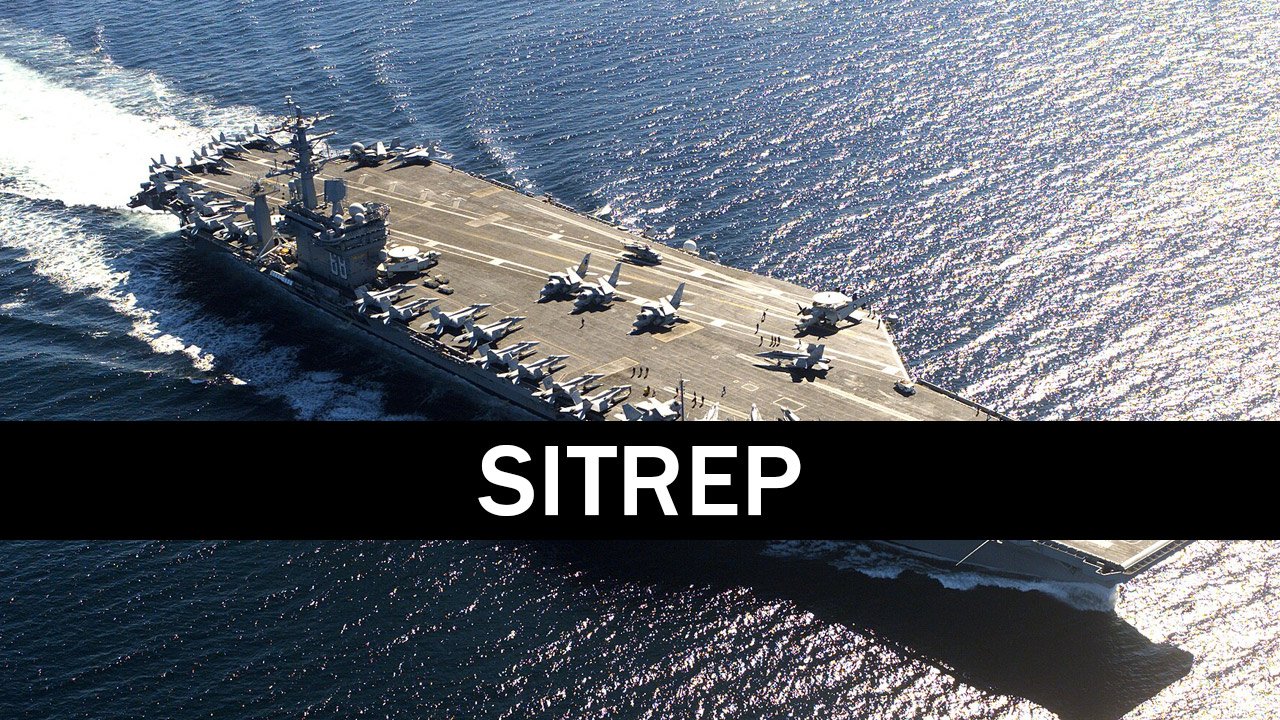
The US Navy confirmed in a short statement that “explosions and fires” had occurred aboard “several vessels” of the Pacific Fleet, causing “injuries and loss of life.” Search and rescue and damage control operations are under way.
The Navy gave no further details.
02:10 GMT
Context: how we got here
The incidents come at the most dangerous moment in a crisis that has escalated rapidly over the past seven months.
The Geneva Accord. In March, the United States, Russia and China signed the Geneva Accord, committing to no further invasions or territorial seizures. It was widely hailed as the most significant arms-control agreement since the Cold War.
Ukraine. Within weeks of the signing, Russia launched an offensive in Ukraine that Western governments failed to anticipate. Russian forces used air power, naval strength and elite formations at a scale never seen in seven years of fighting. Ukrainian defences collapsed across several fronts, and Russia now controls most of the country. Kyiv’s government has relocated to the west.
Analysts have struggled to explain the change. A growing number of Western intelligence officials and military experts now believe Russia deliberately held back much of its military strength since 2022, fighting with older equipment and expendable units while preserving its modern forces. If true, it would be one of the largest military deceptions in modern history.
“We built our entire threat picture around a Russia that was exhausted,” one European defence official said last month. “That Russia may never have existed.”
Vietnam. Weeks after the Ukrainian collapse, Russian troops and equipment began arriving in Vietnam. Moscow called it a logistics and training arrangement. Satellite imagery has since shown a buildup far beyond any training mission: fighter aircraft, air defence systems and amphibious landing ships at Cam Ranh Bay.
Taiwan. In September, China launched a full-scale invasion of Taiwan. It declared the accord a “Western instrument of containment.” PLA forces are now ashore and fighting in several cities, and the island remains under blockade.
The Western response. Washington has called the two offensives “a deliberate and coordinated betrayal” of the accord and formally declared it void. The US has imposed its most sweeping sanctions to date on both Russia and China, including freezing state assets and cutting major banks off from the dollar system. Several countries have expelled Russian and Chinese diplomats.
NATO held an emergency leaders’ summit in Brussels after the Ukrainian collapse. Poland, the Baltic states and Finland requested consultations under Article 4 of the alliance treaty, and tens of thousands of additional NATO troops have been deployed to the eastern flank. Allied officials say the alliance is now at its highest state of readiness since the Cold War. Leaders stopped short of committing NATO forces to Ukraine, a decision critics in Kyiv have called “a death sentence.”
The Five Eyes partners (the US, UK, Canada, Australia and New Zealand) issued a rare joint statement condemning both offensives and announcing expanded intelligence-sharing and defence coordination in the Indo-Pacific. Australia and the UK have committed naval and air assets to the region. Japan, South Korea and the Philippines have opened their bases and airspace to allied forces.
Not everyone has followed. India, Brazil, South Africa, Indonesia and much of the Gulf have refused to join the sanctions and called for “immediate dialogue,” exposing deep divisions over how the world should respond.
At the UN, every Security Council resolution has been vetoed by Russia, China or both.
“The accord didn’t fail,” a senior Western diplomat said. “It was used. It bought them six months of us standing down.”
The carriers. Under intense political pressure for a swift response, the US dispatched several carrier strike groups toward the Taiwan Strait last week. They were in transit when today’s incidents occurred.
02:20 GMT
Markets halt trading
US stock futures fell sharply enough overnight to trigger automatic trading halts. Oil prices rose more than 20% before trading was suspended in Asia.
02:50 GMT
Governments urge citizens to leave
The US, UK, Canada, South Korea and several EU states have raised travel advisories for Taiwan, the Philippines and parts of southern Japan. Major airlines have suspended flights across much of the region.
03:15 GMT
Families wait for news
Families have gathered outside naval bases in San Diego and Yokosuka. The Navy says it will notify next of kin before releasing names, and has asked the public not to share unverified casualty information online.
03:40 GMT
Japan convenes emergency security meeting
Japan’s prime minister convened an emergency meeting of the National Security Council. The chief cabinet secretary told reporters the government was “gathering information” and “taking every measure to protect the lives of the Japanese people.”
He declined to answer questions about the Russian presence in Vietnam.
04:05 GMT
Reports: US–China military hotline unanswered
US officials have attempted to reach their Chinese counterparts through the defence hotline set up to prevent miscalculation, according to two people familiar with the matter. Beijing has not responded, they said.
04:30 GMT
Why this matters: analysis
The incidents remove much of the US naval air power that was heading toward Taiwan at the most critical point in the war.
“Whatever caused this, the effect is the same,” said a former US naval officer now at a Washington think tank. “The cavalry isn’t coming, at least not soon. And everyone in the region knows it.”
Analysts warned the coming hours are among the most dangerous since the crisis began. If Washington concludes the blasts were a deliberate attack, it will face enormous pressure to respond against China directly.
“Right now the most important thing anyone can do is slow down,” said a former NATO official. “Attribution has to be right. If it’s wrong, we are in a war nobody can control.”
04:55 GMT
Kremlin warns against “reckless conclusions”
The Kremlin’s spokesperson said Moscow was following the reports and warned against “reckless conclusions that could push the situation to the edge.”
Separately, Russia’s defence ministry said its deployment in Vietnam was “fully consistent with bilateral agreements” and “not directed at any third country.”
Vietnam’s foreign ministry has not commented.
05:20 GMT
China rejects “groundless speculation”
At a regular press briefing, a Chinese Foreign Ministry spokesperson rejected suggestions of Chinese involvement.
“Some in the US are rushing to smear China before any facts are established. This is groundless and irresponsible, and we firmly oppose it,” the spokesperson said. “The US should reflect on why it has sent its warships thousands of miles to interfere in China’s internal affairs.”
The spokesperson urged “all parties to exercise restraint” and said the US “bears full responsibility for the tension in the region.”
05:48 GMT
Officials: blasts appear to have originated internally
Two US defence officials, speaking on condition of anonymity because they were not authorised to discuss the matter, said early indications suggest the explosions originated inside the ships rather than from an external strike.
“Nothing came in from outside. That’s what’s frightening people,” one official said.
The Navy’s statement did not mention sabotage. NCIS has been asked to assist, according to one of the officials.
06:12 GMT
Pentagon: “We are not going to speculate”
At a brief press conference, a Pentagon spokesperson confirmed incidents aboard “multiple vessels” but declined to say how many, name the ships or give casualty figures.
“We are not going to speculate on cause while an investigation is under way,” the spokesperson said. Asked whether the incidents were connected, they said only: “We are looking at every possibility.”
The Sentinel is a fictional in-universe news outlet created for world-building. It does not represent real events, organisations or people.